

Hip Replacement Recovery Clothing: Dress Without Bending Past 90°
Side-opening adaptive clothing for total hip replacement patients, no crossing the legs, no bending forward, no hip dislocation risk.
Free shipping · COD available
Shop Hip Replacement Recovery Clothing
All garments open fully at the side. No bending past 90°, no crossing legs required.
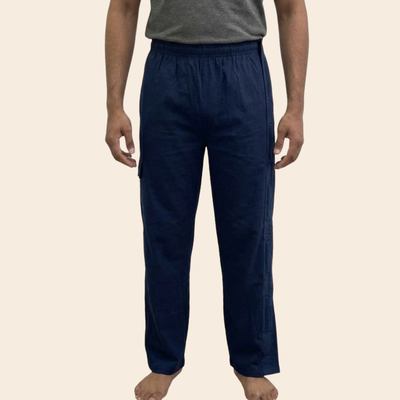
Men's Velcro Pajamas | Side-Opening Pyjamas for Surgery Recovery | No Step-In Needed
Opens at side · no bending past 90°
Rs. 1,599.00
View product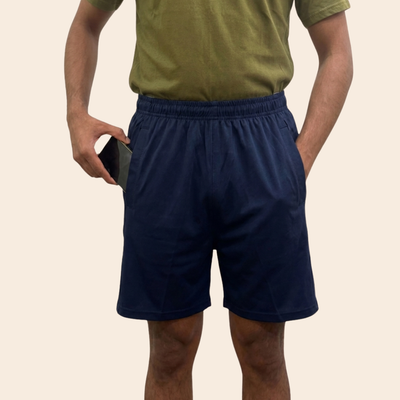
Men's Surgery Shorts | Side-Opening Tearaway Shorts for Post-Op Recovery | 100% Cotton
Tearaway from hip · physio access in seconds
Rs. 1,199.00
View product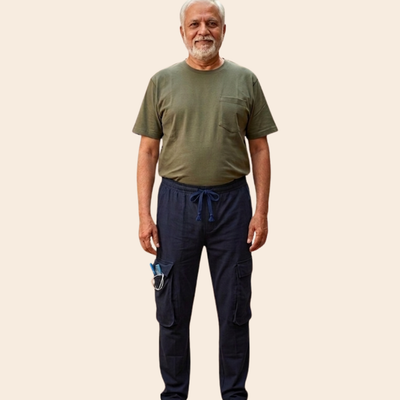
Catheter Pants for Men | Side-Zip Easy-Wear Trousers for Urine Bag & Drain Bag Patients
Catheter port · dignity during hospital stay
Rs. 1,599.00
View product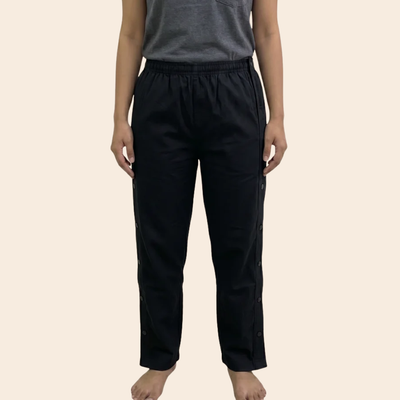
Women's Velcro Pajamas | Side-Opening Pyjamas for Surgery Recovery | No Step-In Needed
Opens at side · no bending or crossing legs
Rs. 1,599.00
View product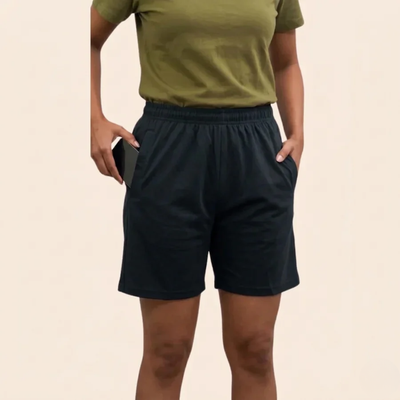
Women's Surgery Shorts | Side-Opening Tearaway Shorts for Post-Surgery Recovery | 100% Cotton
Tearaway from hip · physio access in seconds
Rs. 1,199.00
View productHow to put it on: 4 steps, hip stays above 90°
The 90° hip precaution must be maintained at all times. Standard dressing violates this precaution on the very first morning.
If you're buying this for someone you're caring for
You work the velcro. They sit on a raised chair, back straight. Hip angle stays above 90° throughout, no leaning, no crossing.
Dressing in standard clothes is one of the most common moments of re-injury after hip replacement. Side-opening garments remove that risk.
The velcro adjusts around swelling and dressings. If between sizes, go larger. Loose fit also makes the 90° angle easier to maintain.
Why hip replacement dressing is dangerous without the right clothing
After total hip replacement, the hip must not be flexed beyond 90° for the first 6–12 weeks. Pulling on regular trousers or pyjamas requires bending forward past this angle.
Crossing the operated leg over the other to put on clothing is strictly forbidden after hip replacement. It risks dislocating the new hip joint.
Attempting to dress on one leg, or losing balance while bending, is one of the most common causes of re-injury after hip replacement.
How this clothing helps
The garment opens fully at the side, legs slide in from the side without the hip ever needing to flex past 90°. No reaching down to pull fabric up.
Standard trousers require stepping through or pulling over, both involve crossing or positioning the operated leg. Side-opening eliminates this entirely.
The entire dressing process can be completed while seated on a raised chair. No standing on one leg, no balance risk during an already vulnerable recovery phase.
Catheter cargo pants include a dedicated access port, no undressing required for catheter bag changes in the first days post-surgery.
Recovery timeline: when will you need adaptive clothing?
Dr. Ramesh Kumar · Orthopaedic Surgeon
"Hip dislocation risk is highest in the first 6 weeks. Dressing in standard clothing, especially trousers, is one of the most common moments patients inadvertently violate their precautions. I advise side-opening adaptive clothing to every total hip replacement patient at discharge."
"My father had total hip replacement surgery. The hospital said no bending past 90°. These pants were the only thing we could put on him in the first two weeks. Brilliant product."
"Had hip replacement at 67. Dressing was my biggest worry. These pants made the whole first month manageable. No bending, no struggle. My physio was impressed too."
"Ordered the catheter pants for my husband's hospital stay and recovery. The access port works perfectly. Absolutely necessary after hip surgery."
Frequently asked questions
What is the 90° hip precaution and how does it affect dressing?
The 90° precaution means the hip joint must not bend more than 90 degrees, so bending forward to pull on trousers, crossing the legs to put on footwear, or leaning forward during dressing are all restricted. Side-opening clothing is the standard recommended solution during this recovery phase.
How long do hip precautions last after total hip replacement?
Most surgeons advise hip precautions for 6–12 weeks, though this varies. Posterior approach surgeries typically require longer precaution periods than anterior approach. Your surgeon will advise the specific timeline at discharge. Adaptive clothing is generally needed for the full precaution period.
Can a catheter be managed with these clothes?
Yes. Catheter access cargo pants have a dedicated port that allows catheter bag management without undressing. This is particularly useful in the first 1–2 days post-surgery when a urinary catheter is common.
What about dhoti or lungi, are they safe after hip surgery?
Traditional draping methods like a dhoti or lungi require forward bending and leg crossing to wrap and secure, which violates hip precautions. Until precautions are lifted, side-opening adaptive pants and shorts are the safest option.
Make the first weeks safer
For your recovery, or for someone you're caring for.
Shop hip replacement clothingRecovering from something else?
This page provides general educational information. It is not medical advice. Always follow your surgeon and physiotherapist's specific guidance.